Leave the Phone, Take a Camera

When you're at an event, how do you capture memories? For most, the answer is probably "with my smartphone". While phone cameras have continued to improve year over year, it's worth asking if they trulu are the best tool for the job, or are they causing more harm than good?
The Smartphone Photographer
You only have so many pockets, so when smartphone cameras got "good enough" people were happy to carry one less device. And who can blame them? We've gone from a backpack filled with an iPod, PSP, Palm Pilot, digital camera and mobile phone to just the mobile phone. Incredible right?
Ultimate Convenience
Not only have smartphone cameras replaced the weight of the devices we carry, they've brought with them a number of other conveniences over the compact camera era. On a moments notice you can pull out your phone, click a button and take a near endless amount of photos. Each photo comes out looking great thanks to software magic, and storage/film concerns are a thing of the past thanks to cloud storage. Every moment can, and typically is, captured thanks to a phone in nearly every pocket.
Drowning in JPEGs
The first downfall of convenience comes in a sea of photos. Sure, you can capture every little interesting (and uninteresting) thing and fill your cloud storage to the brink, but to what end? How often do you review those photos? If you're anything like me, the answer is "rarely", but yet you have a decade's worth of photos sitting in Google Photos. When you do want to relieve a moment, you have to rummage through the unorganized mess of food pictures, selfies and screenshots. But even then, when Google or Apple gives you a notice that your storage is nearly full, you accept the offer to upgrade rather than trim your digital hoard. Because "what if" that photo you delete is meaningful in 10 more years?
Over Processed
Remember when processing photos meant a darkroom and vats of chemicals? Or when it meant firing up Photoshop and Lightroom to adjust histograms and contrast levels? Gone are those days, and in their place is a magic black box of image processing and "AI" driven algorithms that manipulate our photos for us! And why should we care, as mentioned above the photos will end up in the digital hoard and never be looked at again.
The issue with this comes in a loss of authenticity and attention to detail. When every photo is over-processed, or even altered with AI, we are losing the individuality of the moment and of the photographer. You might not consider yourself a photographer, but if you're holding the camera, that's exactly what you are. Even capturing a simple memory unveils a bit of uniqueness that you bring to the camera. As we start to let AI replace backgrounds or even insert people into our photos, we are creating inauthentic, impersonal, false memories.
Who Owns Your Memories?
You might answer "well I own my memories of course, nobody can take that from me!", and sure, you own the ones in your head, but not the ones you captured. For Android users, Google owns your memories and for iPhone users, Apple does. What does this mean? Well they could delete 20 years of your life in seconds for starters. Don't like that? Good luck moving to something else. Tech companies intentionally make it hard to move platforms, a concept known as "platform stickiness".
But what about the convenience features they offer, such as searching photos by a person's name or an object? All of that is powered by analyzing and training models on your photos. If you truly think they'll keep that data private and away from third-party advertising partners, you have a lot more faith in big tech than I do. Not to mention your susceptible to a data breach leaking your photos online at any moment.
Memories of Not Being Present
All this brings us to the last, and arguably most important pitfall of convenience. This point comes in two parts. First, not every moment needs to be captured, some should just be lived.
There are a lot of happy moments I can look back to before smartphone cameras. I love reminiscing with friends and family about them. The conversation typically goes something like "remember when we did X and Y happened?" to which they reply "wait no, didn't Z happen? And then we did....". It leads to a conversation, a shared trip down memory lane. Now try the same conversation with a phone. "Hey, remember X?" to which someone might reply "yeah hold on, let me search for the 50 photos I took. Yep here they are, every second of it documented".
While that example might be extreme, I think it gets my point across. You aren't filming a documentary, you're living your life. Photos should be there to spark conversation.
Second, I'd argue that every interaction with a phone is an opportunity for distraction. Sure, you started off wanting to capture your kid blowing out candles at their birthday party, but while you were taking the picture an Instagram notification showed up. "Better check that real quick" you think. Oh, but you've also got a missed email, "it'll just take a second to check" as you open Outlook. Meanwhile, your kid is sitting there, watching you play with your phone, showing them where your true priorities are.
Leave the Phone in the Car
What's the alternative to using your phone to capture memories? Leave your phone in the car, and instead take a purpose built device with you. One that can't distract you, doesn't train LLMs on your photos and forces you to be selective and present.
Professional Versus Point-and-Shoot
I'm going to lump our options into two categories, professional style cameras and point-and-shoots. A professional camera would be anything that you carry in a camera bag, think DSLRs and mirror less cameras like the Sony A7 IV or Nikon D5100 (both cameras I own and love). While these are amazing cameras, they are terrible for capturing memories. They're bulky, somewhat complicated to operate and delicate. You're not going to want to lug them around, and instead will revert back to your phone.
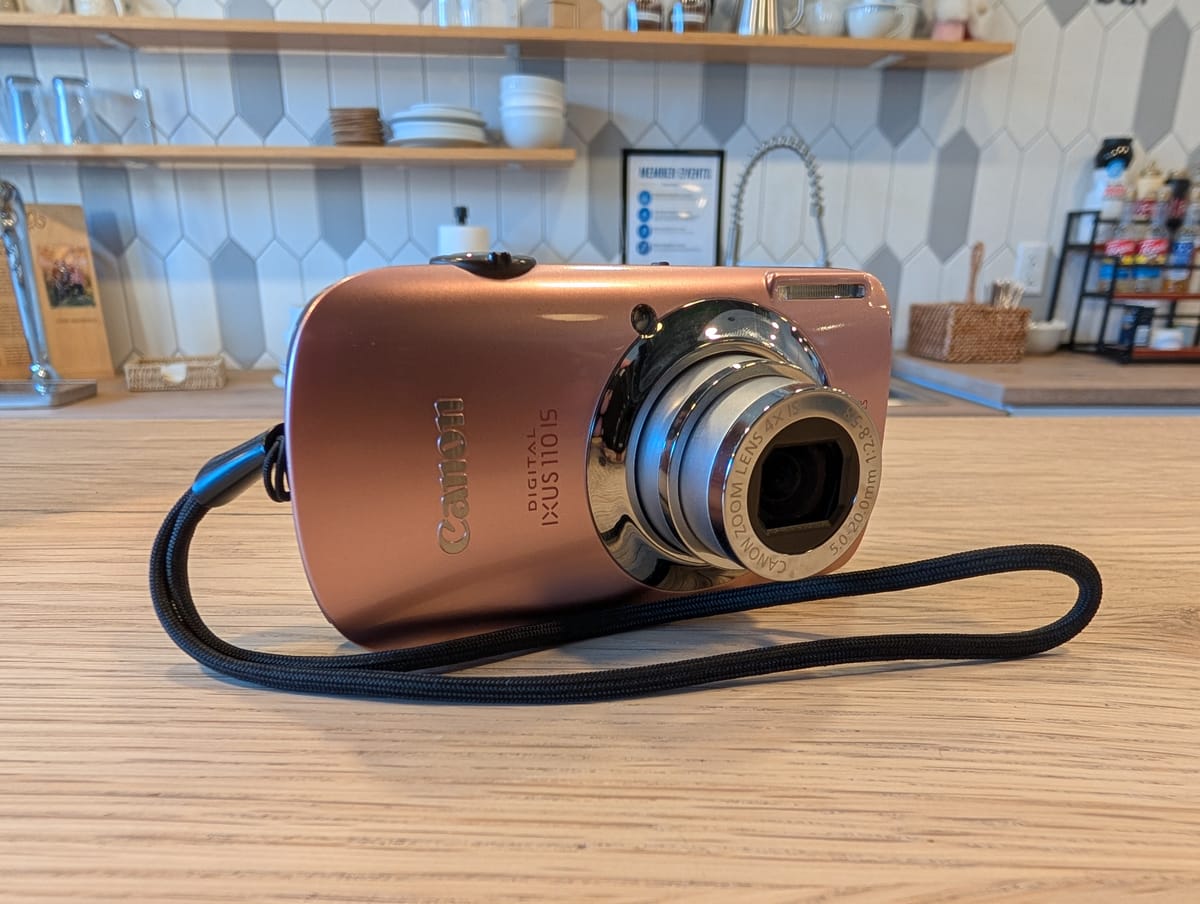
In the other corner, we have point-and-shoots, otherwise known as "compact digital cameras". Before smartphone cameras, these were extremely common. They fit in your pocket, are simple to operate and have reasonable enough default settings. The best part? You probably have one sitting in your basement. If not, they are extremely cheap to pickup used and revitalize with a new battery. I personally use a Canon Digital IXUS 110 that we bought it in Japan 14 years ago. With a $16 battery, it works like new. It's sleek, lightweight and most importantly, takes good enough photos.
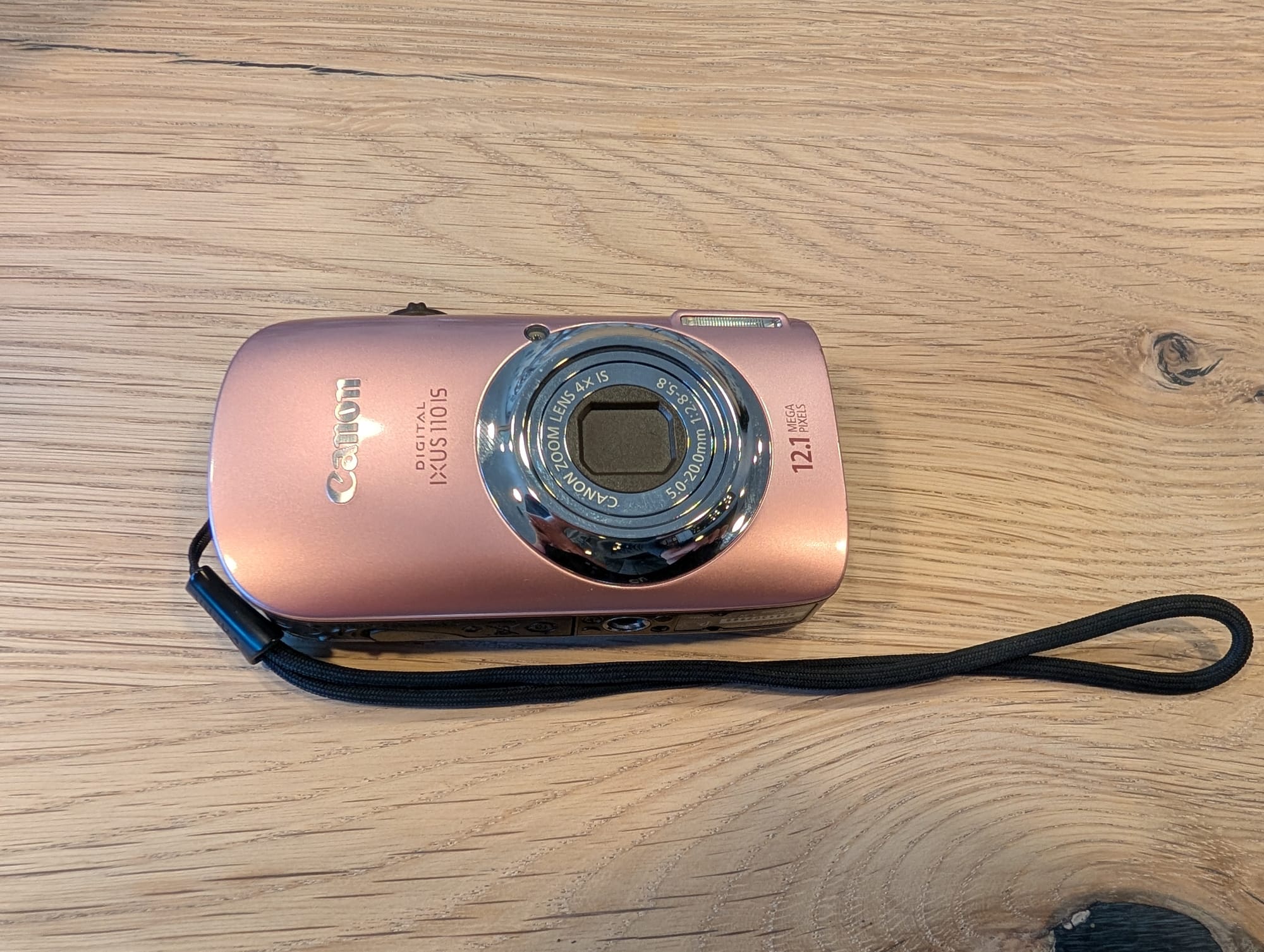
When shopping for a used point-and-shoot, look at popular brands like Canon and Nikon. Find reviews from the era of compact cameras, keeping your eyes open for the higher tier cameras of the period. While they might have cost a fortune then, they won't be nearly as expensive now. Some cameras might have a shutter count, if so you can ask the seller when comparing options. You might also ask for a sample picture or two from a seller to ensure there are not noticeable defects with the lens. Ensure the camera you choose has easily replaceable and purchasable batteries. Finally, look for cameras with optical zoom rather than digital only.
When selecting a camera, worry about things like battery life, size and weight more than image quality. While image quality is important to a degree (you want to be able to see the photo you took), it isn't key. A moment isn't less memorable due to film grain or low sensor resolution. You're not setting out to make a poster or send your photo into a competition, you're capturing moments in time to spark future conversation.
Analog in a Digital Age
It's worth mentioning that digital is not the only option here. Film cameras capture memories equally as well! In fact, there's a huge advantage to film cameras disguised as a negative: limited film. Having a roll of film with a finite number of shots prevents you from hoarding pictures. You choose your shots more carefully and shoot less frequently. This keeps you in the moment, and results in more meaningful pictures.
The real disadvantage of film cameras these days is the barrier to processing film. Gone are the days of one hour photo at your local store. You can get the equipment and chemicals necessary to do it yourself if you have the space and time, and that's a great way to be more connected with your photos! Additionally, there may still be local options near you if you live in a major city. Beyond that, you'll need to send it off somewhere to be processed, for example the Memphis Film Lab in Cleveland, Ohio.
While I don't use an analog camera, I implement a trick to replicate the experience of a roll of film. My previously mentioned Canon has a 512MB memory card in it. That's roughly 256 photos. Still a large film roll, but not unlimited. This forces me to be conscious of the hard limit on the number of photos I take.
Selective Retouching
With a point-and-shoot camera, your photos no longer automatically sync to the internet. This means you have to manually import photos from your camera onto your computer, so as to not run out of SD card space. Again, this is an advantage disguised as a disadvantage!
Giving attention to each photo on your camera does two things; it helps combat digital hoarding, and it solidifies the memories in your mind. Importing only the photos you find meaningful helps to maintain a manageable, reviewable collection of memories. Much like repetition helps you study a foreign language, reviewing each photo you took can help to commit it to your long-term memory.
When importing photos, most software offers you the opportunity to retouch as you transfer. I'd argue that most memories do not need retouched, in fact, the raw nature of the photos add a certain charm. But sometimes an image is too dark, grainy or slightly out of focus. Making small adjustments can help to add your personal touch to the photos, much more so than letting an algorithm automatically do it for you.
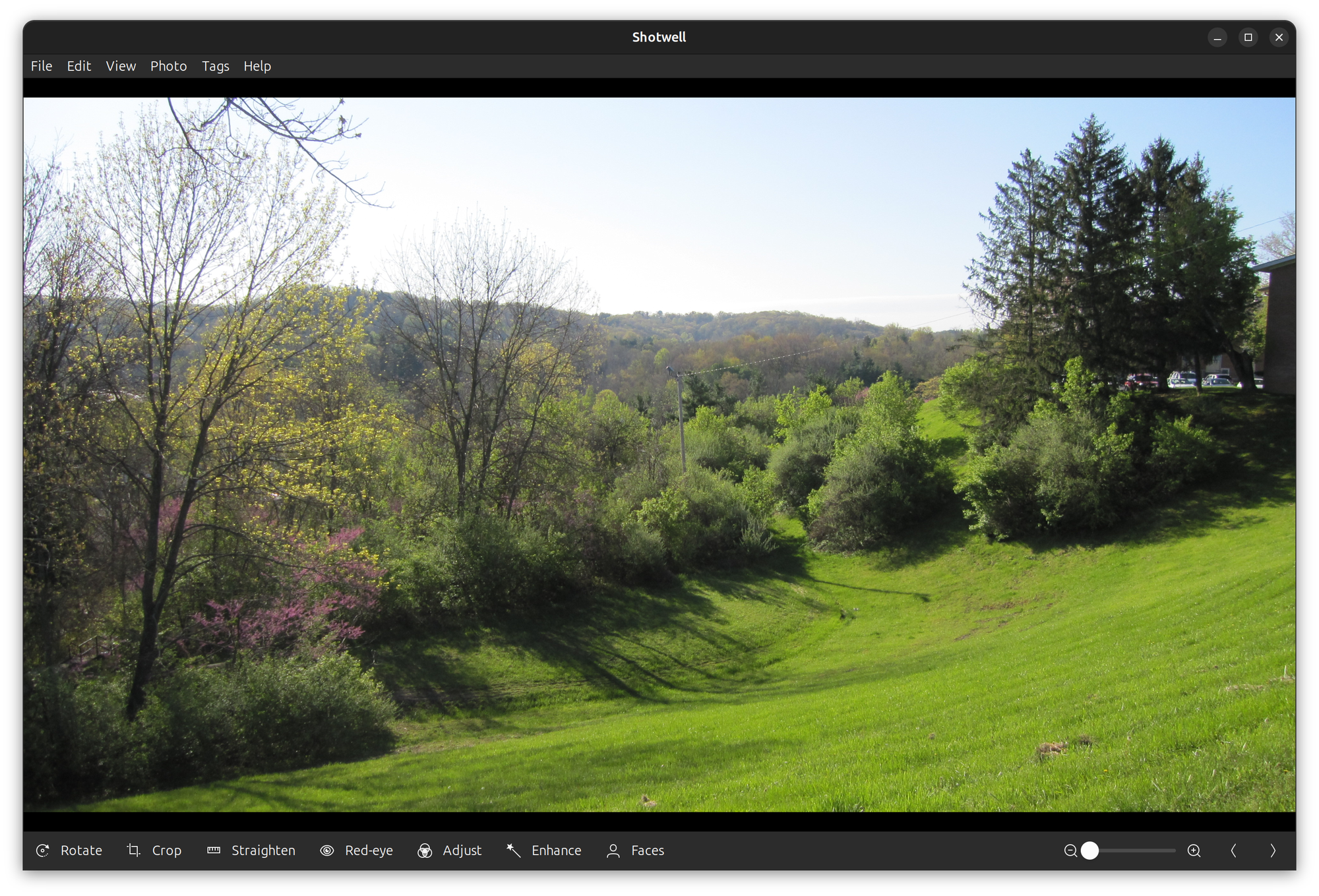
For importing and retouching photos, there are a number of great software applications available. Personally I use Shotwell on my Ubuntu computers and find it to be excellent. I'd recommend finding software that is free, open-source, offline and simple to use. Digikam and Dark Table are great options.
Going Physical
While a well-curated collection of digital photos is great, nothing can beat a physical photo album. An album of memories on the coffee table or in the book shelf is an accessible conversation starter. I've never gathered around a digital photo frame to reminisce about my wedding, but I have sat next to friends on a couch with our wedding album and talked through the pictures.
Physical photos are perfect for keeping memories alive, even when you're gone. As my grandmother has gotten older, she has started sending albums from her life to us. Memories of my parents and my childhood along with memories of her life, and even her childhood. I'll treasure these photos and share them with my children as they get older. Trying doing that with a Google Photos link that disappears when your credit card expires.
Memories Now and Later
The most important part of a separate point-and-shoot camera is being present. There's no point to capture memories of something you barely experienced. By leaving your phone in the car or at home, you put the focus on living your life. Be there for the birthday party, the wedding and the family trip. Take a few photos as you go, but experience the now so you can reminisce about it after.
I hope this article encourages you to think differently about how you capture the moments in life that mean the most to you. While the technology industry has made phone cameras seem like the only option, there are still alternatives. It's up to you to weigh the pros and cons of both phones versus dedicated cameras and pick what best aligns with the type of life you want to live.
